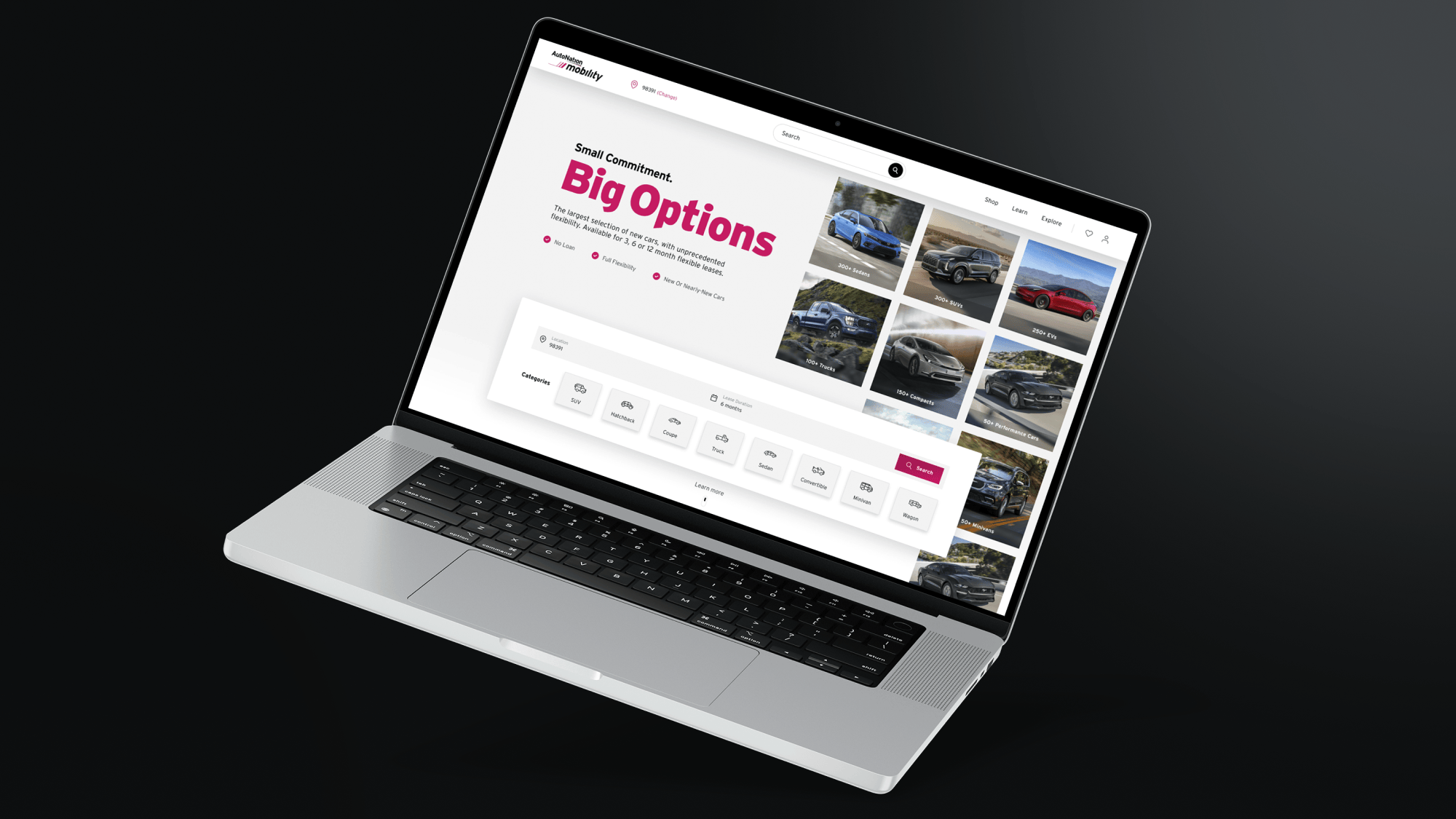
Making flexible leasing easier to understand, helping people choose a vehicle, and building confidence in digital checkout.
The Challenge
AutoNation wanted to offer a more flexible alternative to traditional leasing and car ownership. The challenge was to make that proposition understandable and compelling, help people choose from a large vehicle inventory, and guide them through a digital checkout and approval process.
Across three engagements in 2022 and 2023, we used high-fidelity prototypes and user interviews to explore those decisions. We tested how people understood the offer, weighed its higher monthly price, found relevant vehicles, and responded to credit checks and potential price adjustments.
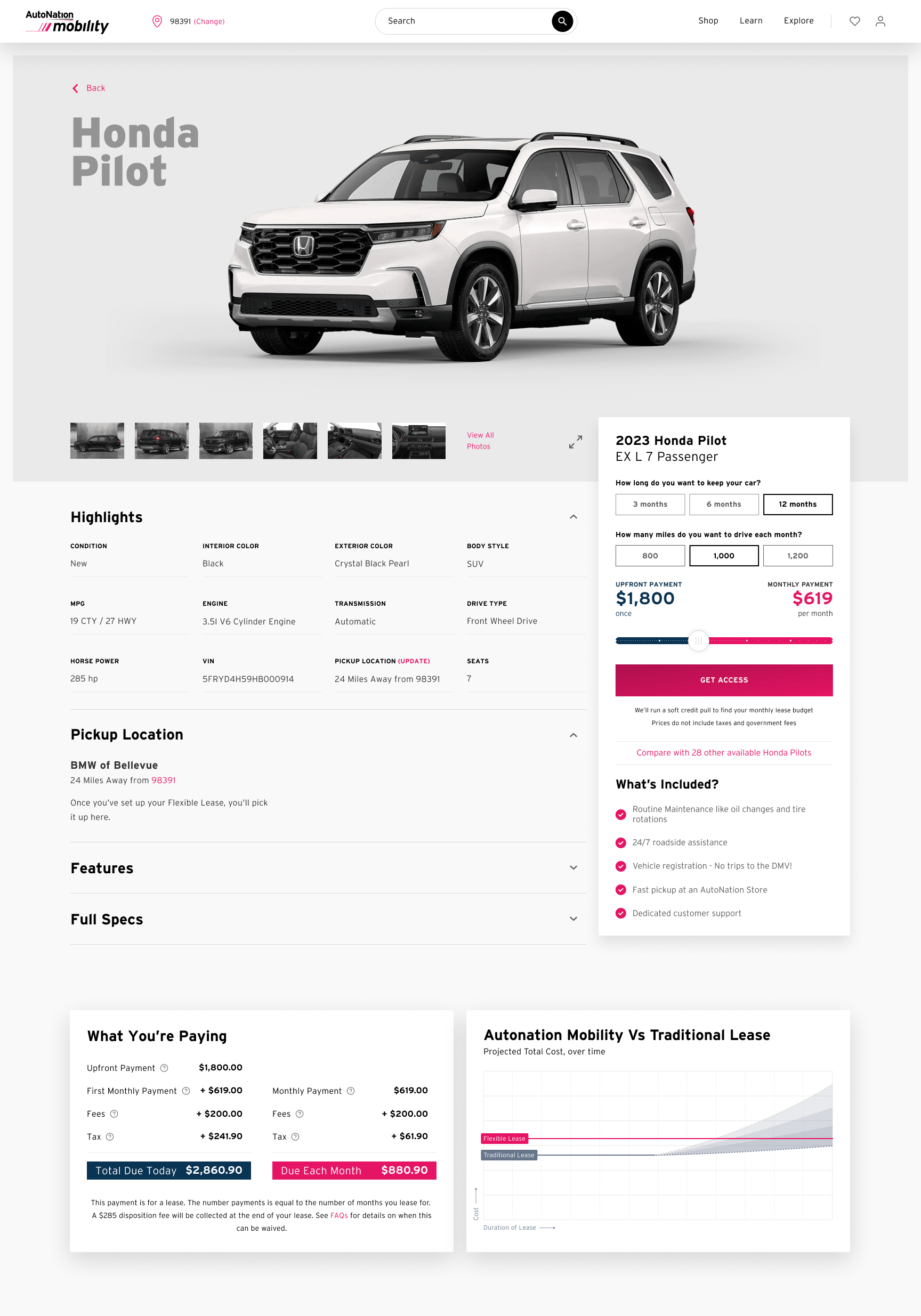
The vehicle detail prototype brought specifications, lease options, and costs together. Testing showed that the projected cost comparison needed rethinking.
Making the Proposition Clear
In the first sprint, we tested the subscription concept with five people aged 25–45, with household incomes above $100,000. A simple comparison table and a list of included benefits helped them understand the offer. Shorter commitments appealed to situations such as temporary relocation or spending time away from home, but the distinction between a subscription, a rental, and a lease was not immediately clear to everyone.
Later checkout interviews revealed a useful pattern: participants consistently described the offer as a shorter-term lease. In the 2023 sprint, we tested the term “Flexible Lease” in place of “Subscription.” The revised messaging communicated the core benefit more directly and helped testers imagine relevant uses for it.
The research also challenged an early ambition: liking the concept did not mean people would return regularly to browse or swap cars. Their interest depended on a real need and the right moment in their lives.
Making the Price Understandable
We explored whether flexibility and peace of mind could justify initially higher monthly costs. By the 2023 sprint, testers who understood the offer expected to pay a premium for flexibility. That did not establish willingness to purchase: they still needed a complete picture of fees and total costs to decide whether Mobility was affordable and worthwhile for them.
One approach did not work as intended. A projected cost comparison with traditional leasing created more confusion than clarity. Testers wanted to understand the actual financial impact of Mobility, rather than a generic comparison between acquisition models.
Our recommendation was to communicate the value of flexibility clearly and show complete costs earlier, including end-of-term fees. Price transparency mattered more than trying to explain away the premium.
Helping People Find and Choose a Vehicle
The first sprint showed that curated vehicle collections could give undecided shoppers a manageable starting point. Participants appreciated having fewer choices organized around their needs, while more experienced shoppers wanted granular filters and richer comparisons.
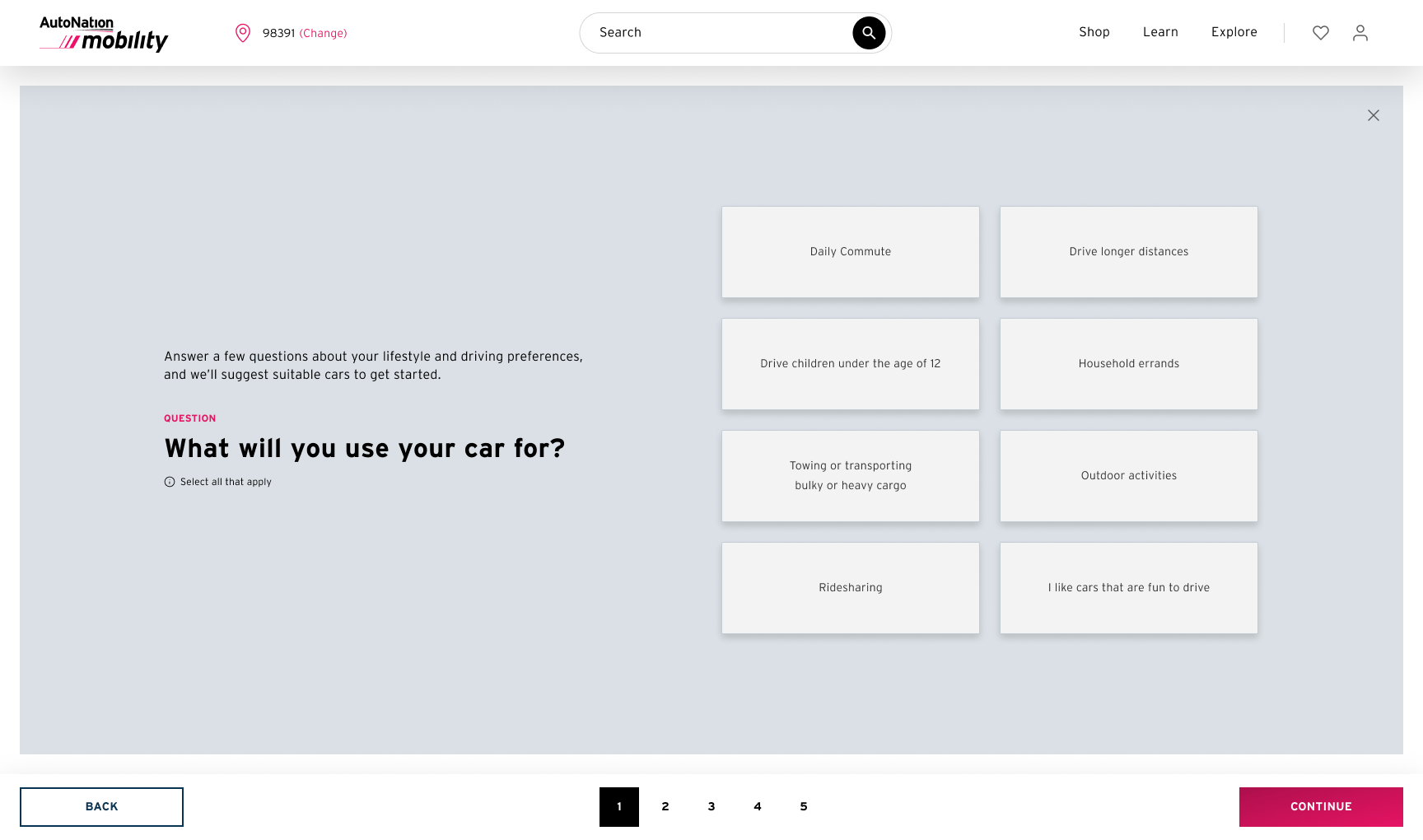
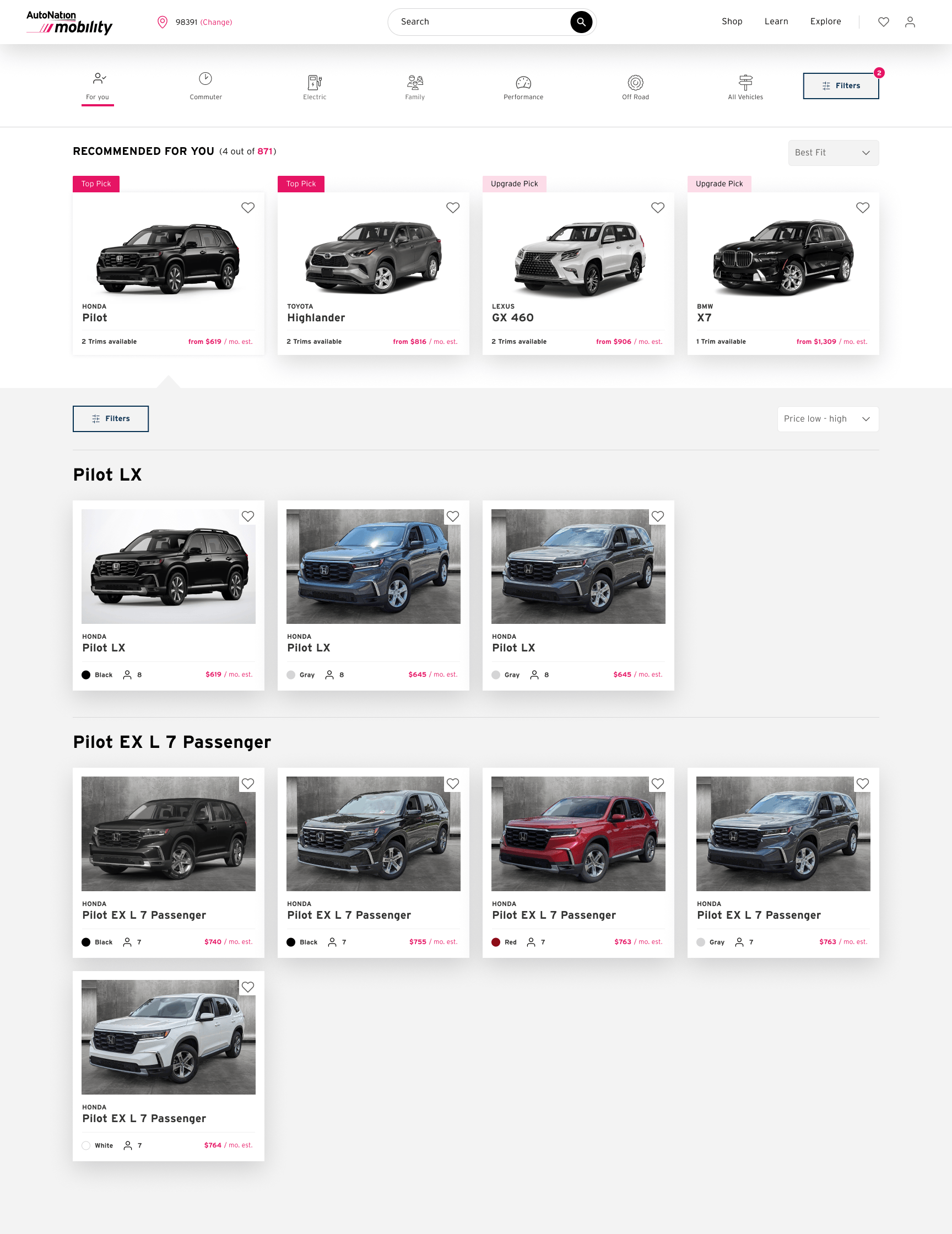
In 2023, we explored a more progressive journey: an optional quiz led to a shortlist of recommended models, followed by trims and individual vehicles. Testers liked the limited, pre-sorted recommendations and useful filters. However, some wanted to understand why a model was recommended and compare models before choosing a specific vehicle.
An optional quiz explored driving needs and preferences to guide people toward suitable vehicles.
The tests exposed further friction within the results. Differences between trims and decision-relevant specifications were not always clear enough. This pointed toward a stronger hierarchy from model to trim to vehicle, with clearer comparisons at each stage. Better discovery supported interest in Mobility, but could not compensate for an unconvincing proposition or an unaffordable price.
Discovery organized around recommended models and available trims, with filters to narrow the selection.
Building Confidence During Checkout
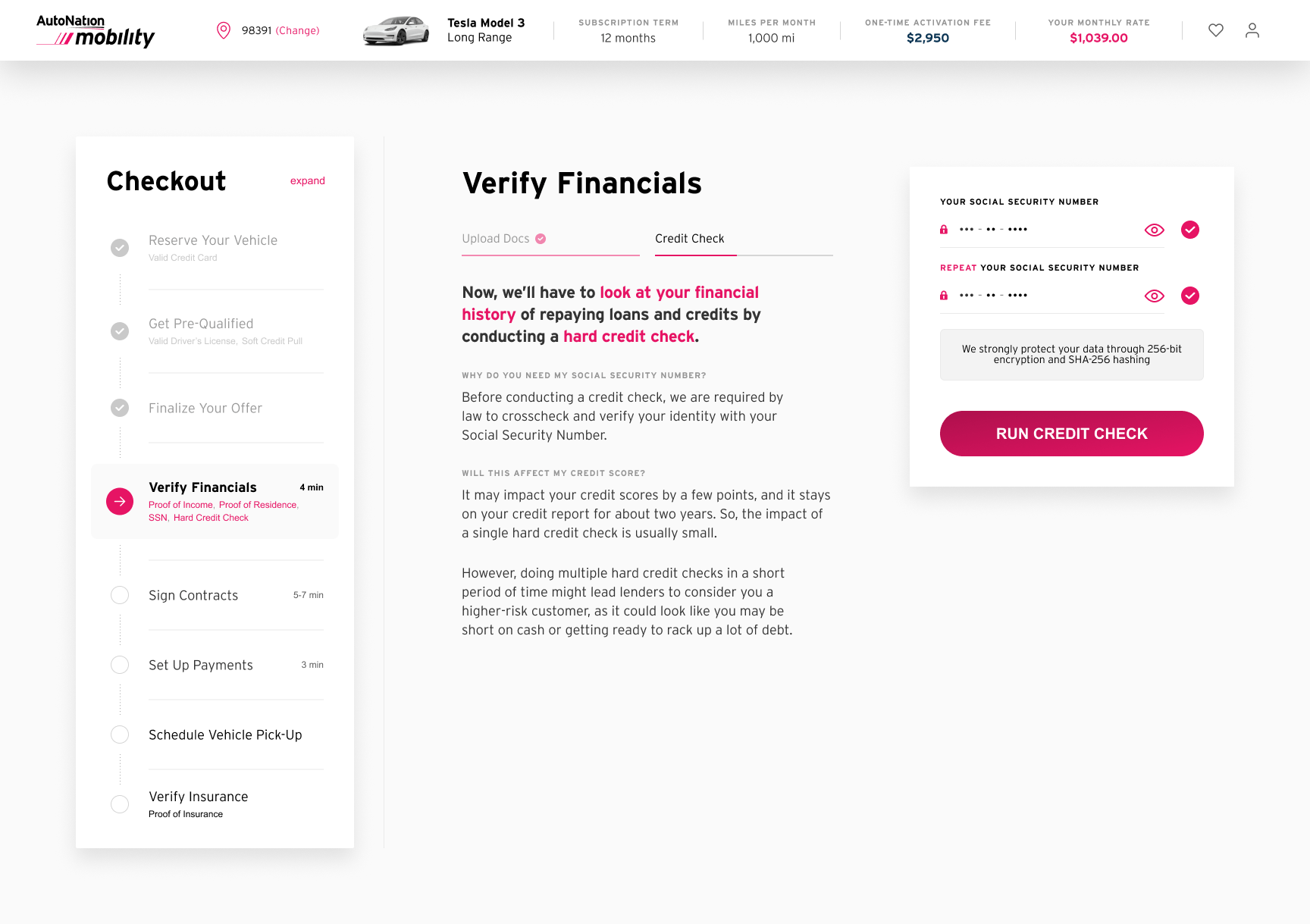
The checkout engagement tested two successive prototypes with ten participants in total. We explored how to guide people through account setup, credit checks, pricing decisions, insurance, and vehicle pickup without leaving them uncertain about what would happen next.
The second prototype introduced a full-screen process overview, clearer stages, and earlier notice of possible quote adjustments. Participants generally found the steps logical and felt supported by progress indicators and timely explanations. The revised overview helped them anticipate the process and prepare for it.
There were limits to that reassurance. Insurance and pickup still raised questions. Even when participants expected a price adjustment, encountering it after choosing a subscription was unpleasant. They also wanted a specific explanation for their revised quote, rather than a generic reference to credit history and income.
The resulting recommendations focused on earlier expectation setting, more explicit cost explanations, and clearer guidance about insurance and pickup. The interviews supported a more understandable checkout; they did not establish an increase in completion rates.
The credit-check step combined progress indicators with explanations of why information was needed and what would happen next.
Outcome
The engagements gave AutoNation tested prototypes and a clearer direction for the experience: lead with flexibility, make total costs visible early, support vehicle selection as a sequence of decisions, and explain checkout requirements before asking people to act.
They also identified what still needed work, from trim comparisons to the timing and explanation of quote changes. These were findings from qualitative prototype testing, providing a basis for further design and development rather than evidence of live conversion or revenue gains.